 FISHINGCRITIC
RIGGING GUIDE
Fixed and slip bobber rigs
Hold bait at a chosen depth and show a bite. A slip float lets a deep rig reel close for casting.
FishingCritic is research-led, using maker data and published sources. We have no hands-on test results for this edition.
What parts do you need?
- Small float that the bait can support
- Size 6–8 bait hook
- Small non-lead split shot
- Slip version: stop knot, bead and slip float
Sizes are our starting examples, informed by the source below. Adjust to current, bait and the rod’s total lure rating.
Standing / main line
Tag end / leader
Grey shapes are tackle; panels show assembly, not product dimensions.
How do you assemble it?
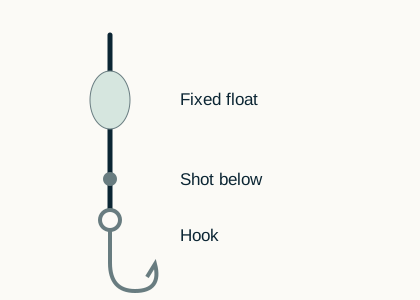
01 Fixed: clip the float above the hook at your chosen depth. Add a small split shot between float and hook. 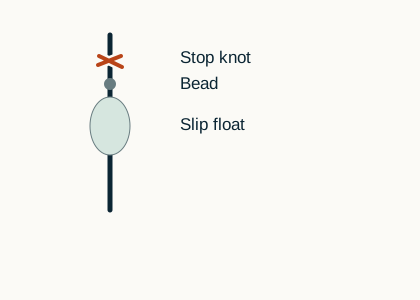
02 Slip: put a stop knot on the main line, then a bead, then thread the line through the float. 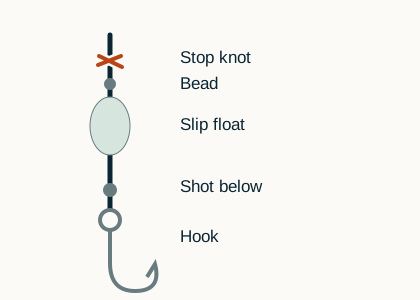
03 Add shot below the slip float and tie the hook. Move the stop to set depth; keep the bait clear of bottom unless that is the plan.
What can go wrong?
A large float can hide light bites. For a slip float the stop and bead go above it; the shot and hook go below.
Where do these facts come from?
The links identify source URLs and check dates. The source data records access limits.