 FISHINGCRITIC
KNOT GUIDE
How to tie a non-slip loop knot
A fixed loop gives a lure room to move. The example uses five turns for 8–12 lb mono; the source gives other turn counts.
FishingCritic is research-led, using maker data and published sources. We have no hands-on test results for this edition.
Where should you use it?
Line: mono, fluoro. Use: loop, lure. The standing line goes to the reel; the tag is the free end. A bight is a folded section of line.
Standing line
Tag end or working bight
A white gap at a crossing shows the strand passing over.
How do you tie it step by step?
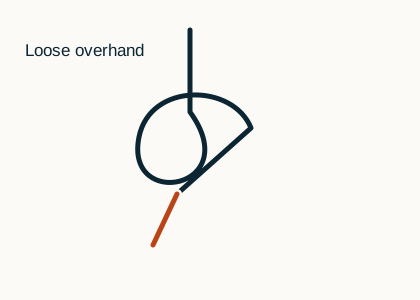
01 Make a loose overhand knot in the standing line, leaving a long tag. 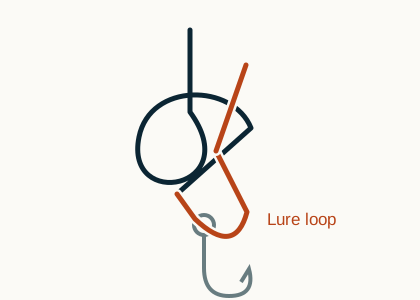
02 Pass the tag through the lure eye and back through the overhand knot. Set the intended loop size. 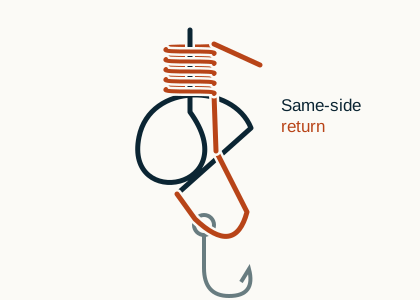
03 Wrap the tag five times around the standing line for the 8–12 lb example. 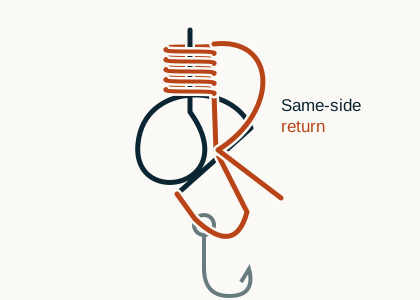
04 Return through the overhand opening on the same side as the earlier exit. Wet, tighten carefully and trim; leave the lure loop open.
What should you check before casting?
The final loop stays open. Tightening the knot all the way onto the lure eye defeats its purpose.
Wet the line before tightening. Pull firmly on the finished connection, inspect the wraps, and retie if they overlap or the line is damaged. No knot-strength percentage is claimed.
Where do these facts come from?
The links identify source URLs and check dates. The source data records access limits.
TAKE IT TO THE WATER
Want six knots in your pocket?
Free knot cards: one knot per page, plus a rig cheat sheet. Print the PDF before your next trip.